Gear I use and recommend.

Everything here is part of my setup and sees regular use. I recommend it with the same context and caveats I would give a friend.

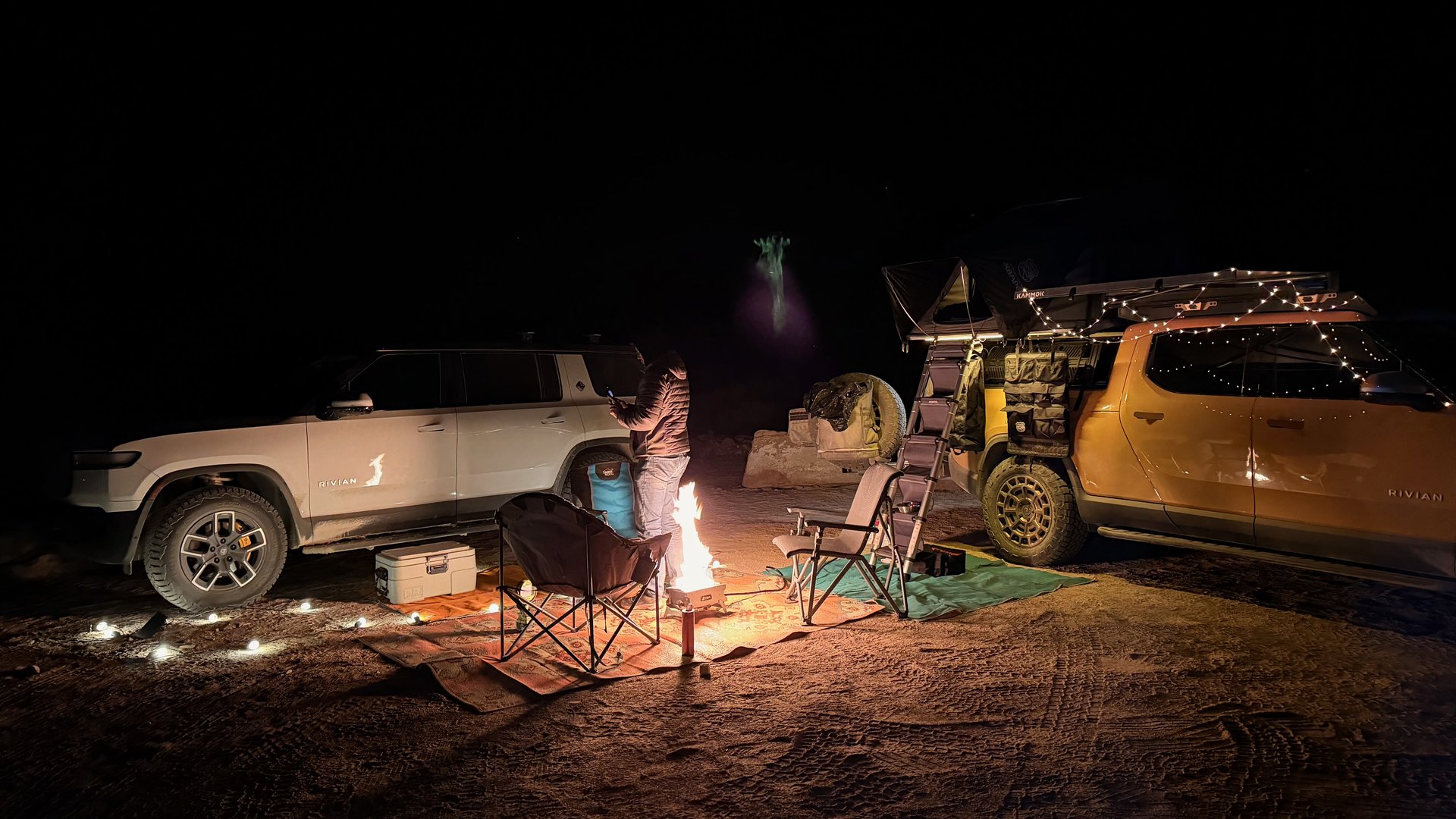
Two Rivian trucks at a desert campsite at night
California

Find it by need

Start with the problem you are trying to solve. Open the full notes for the details and trade-offs.

Every product has a standard link. Some also have optional referral links, clearly labeled.

The truck and its systems

The truck is the foundation. These choices help it work as both a daily driver and a long-distance travel rig.

Compass Yellow Rivian R1T in front of snow-covered mountains
Vehicle

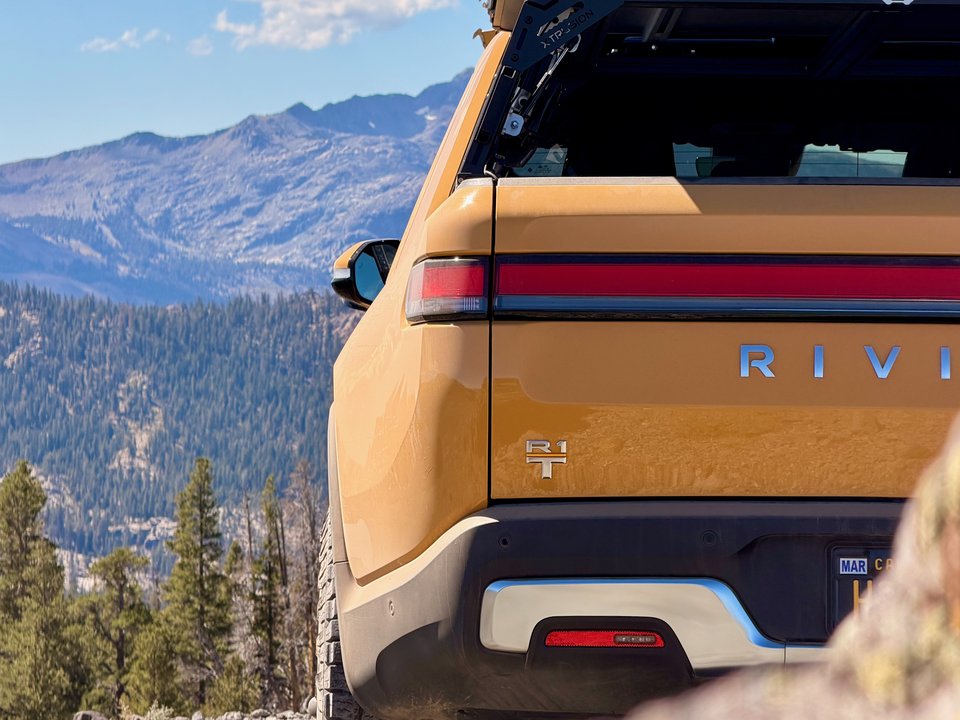
Rivian R1T

  • My daily driver and my only overland vehicle.
  • Comfortable on the trails I choose, then useful for school pickup and groceries.
  • The bed, gear tunnel, front trunk, and outlets support both jobs.

Use

The R1T is both my daily driver and my overland vehicle. It handles the hardest trails I want to drive, then comes home for school pickup, groceries, and ordinary errands. That range is why I use one truck instead of keeping a dedicated adventure vehicle.

Why this one

It is the most versatile vehicle I have owned. The bed, gear tunnel, front trunk, and outlets carry camp systems, recovery gear, food, and everyday cargo without asking the truck to become something different on the weekend. That versatility shapes every later modification.

Trade-offs

A truck bed gets dusty and dirty, and the R1T bed is not airtight. If I carry a lot of cargo off-road, I have to pack with that reality in mind rather than assuming everything back there will stay clean. It is also an expensive vehicle. The Gen 1 is a more cost-effective way into the platform for me, but it gives up some range and camera capability compared with Gen 2.

Alternatives

A Gen 2 R1T makes sense if longer range and upgraded cameras are the priorities. An R1S is worth a hard look if an enclosed cargo area and keeping dust out matter more than a truck bed. Neither is automatically better; the right answer depends on whether you value open utility or a more protected cargo space.

After use

I would not change anything fundamental about the truck. I love the Gen 1 R1T, and Compass Yellow is still my favorite color. I would have a hard time replacing it unless Rivian brought that color back.

Sleep, shade, and camp living

A good camp setup should be comfortable, quick to set up, and durable enough to use often.

Rivian R1T with its iKamper rooftop tent open
Rooftop tent

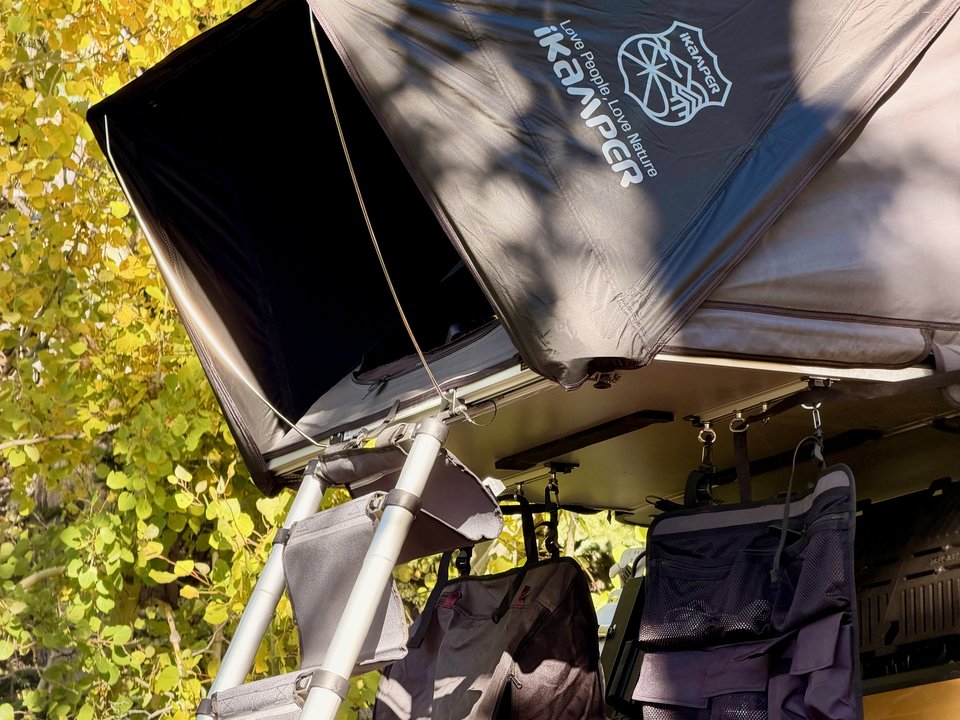
iKamper Skycamp DLX Mini

  • My primary tent: roughly 30–40 nights a year and more than 100 nights so far.
  • Warm, comfortable hard shell with the DLX floor, mattress, and lighting upgrades.
  • Dependable in wind, though power, air, and lighting remain weak points.

Use

This is my number-one tent and where I sleep on nearly every trip. I use it for roughly 30 to 40 nights a year and have spent more than 100 nights in this specific tent. At this point, it is not a speculative piece of gear: it is familiar, comfortable, warm, and cozy in the ways that matter after a long day outside.

Why this one

I chose the DLX version for its cork floor, which helps a bit with insulation, plus the upgraded air mattress and integrated lighting. I could have added those pieces myself for less money. I was willing to pay more to have them installed and ready to use rather than turn the tent into another project.

Trade-offs

The DLX commands a premium for things that could be added separately. Its bigger limitation for me is infrastructure: there is a small pass-through for low-power gear, but not much provision for higher-power 12-volt needs such as an electric blanket, or for routing air from an external heater or air conditioner. I have had to think through those additions myself.

Alternatives

The Rivian-branded tent is compelling, although I would want to understand its blackout performance before choosing it; being able to fully zip this tent up and block the early light matters to me. The newer Skycamp 4 Mini appears to address a few annoyances with this generation. I am also interested in the ARB option for its routed power, but I have not used it myself.

After use

The hard shell has held up well and works especially well in wind. The integrated lighting detached and had to be reattached, and I am not alone in that experience. I would handle lighting differently if I were starting over. Better power and air pass-throughs would also help; the Skycamp 4 and ARB approaches appear to improve both.

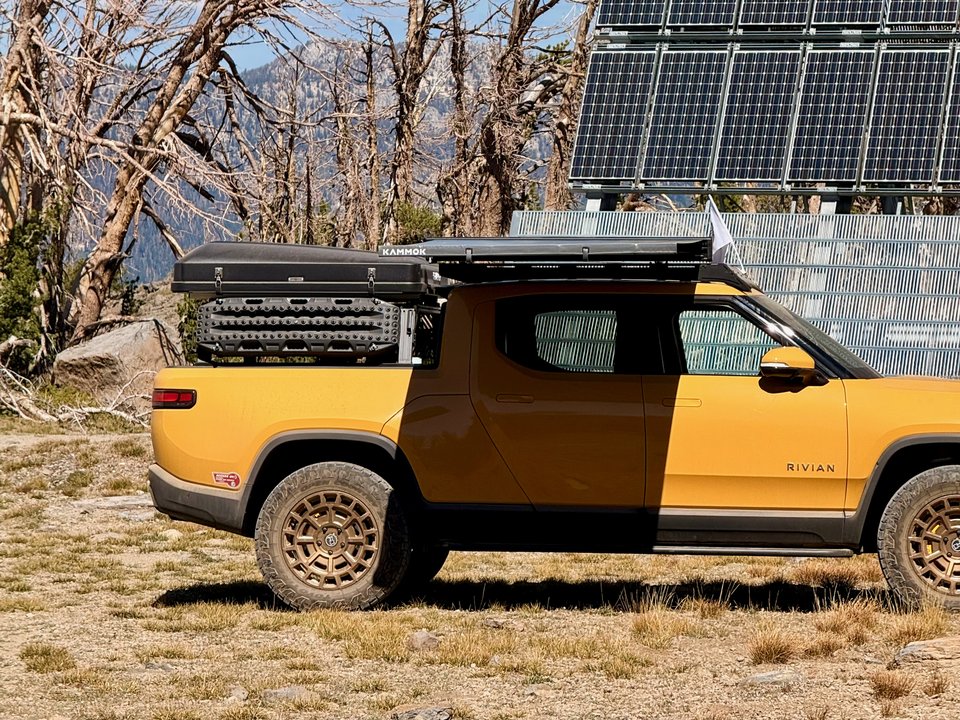
Crosswing awning mounted above the Rivian cab at sunset
Freestanding awning

Kammok Crosswing

  • Permanently mounted and ready for shade or rain in about three seconds.
  • Useful for charging stops, snacks, and small camp tasks—not just full setups.
  • The compact five-foot size beats a larger, more complicated shelter for my use.

Use

I deploy it whenever I need a little shade or protection from the weather: charging stops with no cover, a quick snack, stretching my legs, rain, or a small camp task. It stays mounted because it fits the cab and gets used too often to treat as trip-only gear.

Why this one

The five-foot Crosswing mounts compactly to the roof rack, opens in about three seconds, and packs away in roughly five. That speed is the point: if setup took a minute, I would use it far less often. Because it opens almost instantly, it works for the small stops between full camp setups.

Trade-offs

The five-foot version gives less coverage than a longer awning or a full 270-degree system. More coverage comes with more mounting demands, more bulk, and more to think about around tent and rear clearance. I am interested in additional coverage someday, but I do not want to lose the compactness and speed that make this one so useful.

Alternatives

There are seven-foot versions from Kammok and Rivian that make more sense on an R1S because of its length. A 270-degree awning is another direction if maximum shelter is the goal. It needs a more serious mounting plan and careful clearance around a rear tent, so it is a different trade rather than a simple upgrade.

After use

I have not found another freestanding awning that is this compact and this quick to deploy. I may add more coverage in the future, but I would not get rid of the Crosswing to do it. It has made small moments outside easier often enough that it has become one of my favorite parts of the truck.

Kitchen, water, and hygiene

These small systems make camp work: simple electric cooking, water where I need it, and a way to end the day clean.

Shower

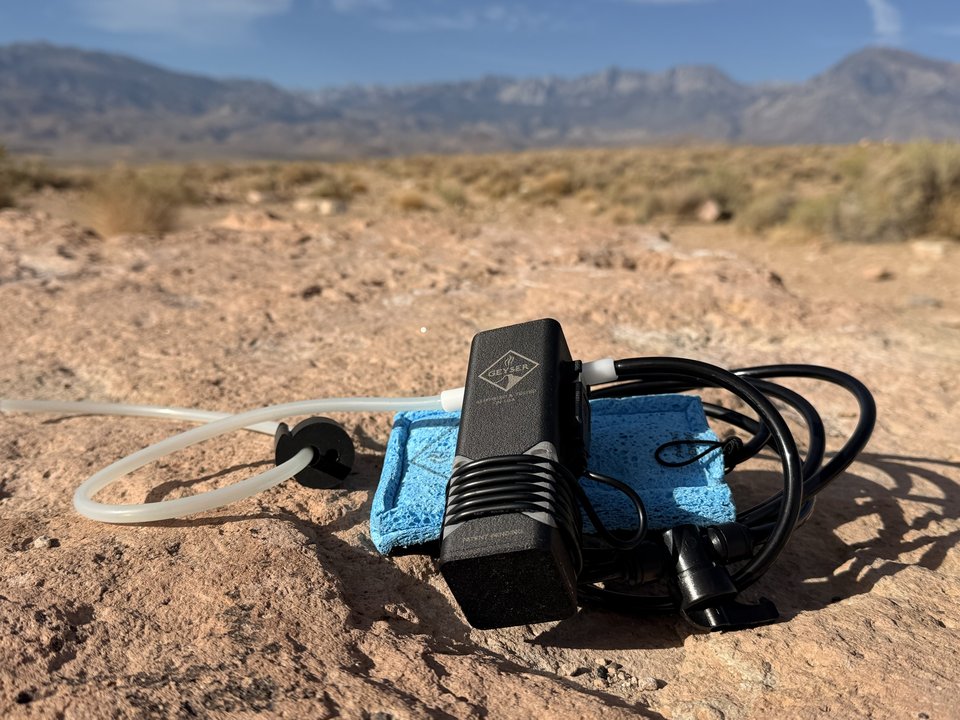
Geyser Clean Kit

  • A genuinely warm, complete shower with less than a gallon of water.
  • Compact enough to stay with the truck and useful enough that I never leave it behind.
  • The current lightweight version is more efficient than the original all-in-one system.

Use

This is the one piece of camp kit I would not leave behind. Being gross on the road stops being fun quickly, and it can ruin a trip for me. The Geyser lets me take a warm, complete shower and actually feel clean while using less than a gallon of water, which changes what is practical when I am away from developed campgrounds.

Why this one

I have used the original Geyser and the current ultralight version for more than five years. Wipes are useful, but I never feel fully clean after relying on them, and most conventional shower systems ask for much more water. This is a compact, water-saving system that gives me a result much closer to a real shower.

Trade-offs

It is still a sponge shower, so it is less pleasant when the air is freezing. A larger hot-water shower can feel more conventional, but it needs more water, space, and energy. I would rather carry a compact system I actually use.

Alternatives

The first-generation Geyser combines the pump and water container in one unit. It works well, but it is larger to store and less efficient to run. The current ultralight version works just as well for me if I source water from another container. Wipes and other water-based shower systems remain valid alternatives if their compromises better match your trip style.

After use

The first-generation model needed a few tweaks. The second-generation ultralight has worked well without the same fuss, and I would keep carrying it.

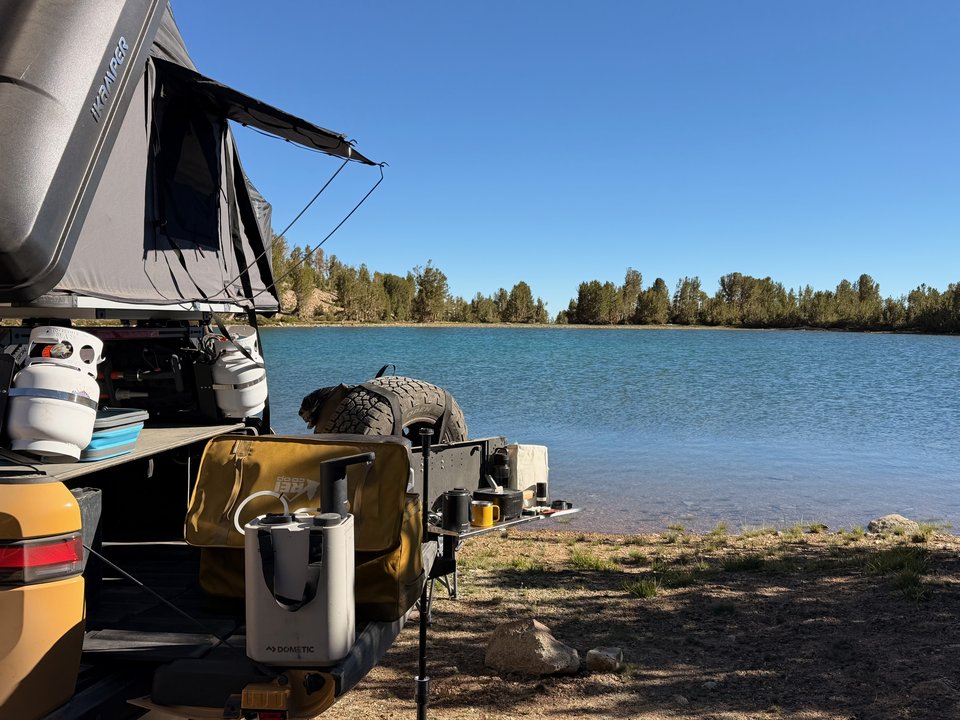
Camp kitchen set up from the rear of the Rivian beside a lake
Water management

Dometic GO Hydration Water Faucet and Water Jug

  • Ready-to-go water for cooking, hand washing, and cleanup.
  • A well-sized jug paired with a USB-C rechargeable faucet and integrated light.
  • I add a seven-gallon AquaTainer when a trip calls for more water.

Use

I use the Dometic jug and faucet for cooking, hand washing, and cleanup. The matched system is ready when I need it, which means I actually use it. For longer trips, I add a seven-gallon Aqua-Tainer instead of asking one container to handle every job.

Why this one

The jug is easy to handle and well made. The USB-C faucet lasts a long time, includes a light, and uses touch controls—useful when my hands are full or dirty.

Trade-offs

It is more expensive than a basic water jug and a generic pump. The cost is the trade for a matched setup that feels good to use every day at camp. I think it is worth it for the quality and convenience, but it is not the cheapest way to get water from a container to your hands or cook station.

Alternatives

Manual and electric pumps can work with more universal containers and may make more sense if you already have a water system you like. This is not the most flexible starting point for that kind of build. It is best when you want a matched jug-and-faucet bundle that is ready to go without adapting it to other container styles.

After use

I would keep the Dometic setup as my main camp water system. It has been easy to live with, and the faucet is useful enough that it stays in regular rotation. For more water, I add the Aqua-Tainer instead of replacing the Dometic jug; that combination has been a better answer for me than carrying a larger, less manageable container every day.

Cooking

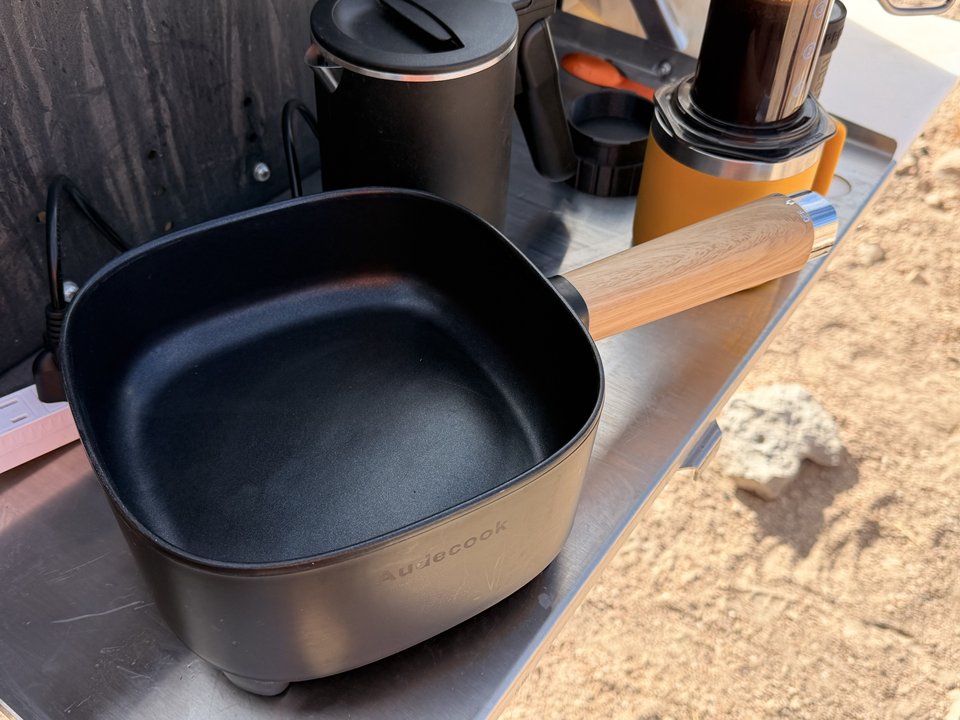
Emily Pan Pan

  • My compact, one-piece electric cooker for almost every camp meal.
  • Boils and simmers directly from the Rivian or a battery bank.
  • Avoids packing induction cookware; the nonstick, small format is the trade.

Use

I use this for almost all of my camp cooking. It plugs in, turns on, and cooks directly inside the pot, whether I am boiling water or simmering a meal. It is compact enough to pack easily and removes the extra pieces that come with an induction cooktop, a compatible pan, and a separate way to heat water.

Why this one

Emily Pan discovered this specific cooker and shared it with the Storyteller Overland community, where it became known as the “Emily Pan Pan.” I use the original 1.0 model. Its wattage works with the Rivian outlet, and the one-piece design takes less space than the induction setups I considered.

Trade-offs

The nonstick surface means I have to be thoughtful about utensils, and the capacity is deliberately small. That is perfect for my usual cooking but not for feeding a larger group. The same brand has larger versions, though they give up some of the compactness and easy storage that make this particular size work so well for me.

Alternatives

An induction cooktop can absolutely work, but it means carrying induction-capable pots and finding a compact unit that stays within the power available from the vehicle or battery system. A larger cooking setup may be better for someone with bigger meals in mind. For the way I cook at camp, this is the simpler and less bulky answer.

After use

It has held up well and comes out on every camping trip. It became my default because it is easy to pull out and start cooking.

Hot water

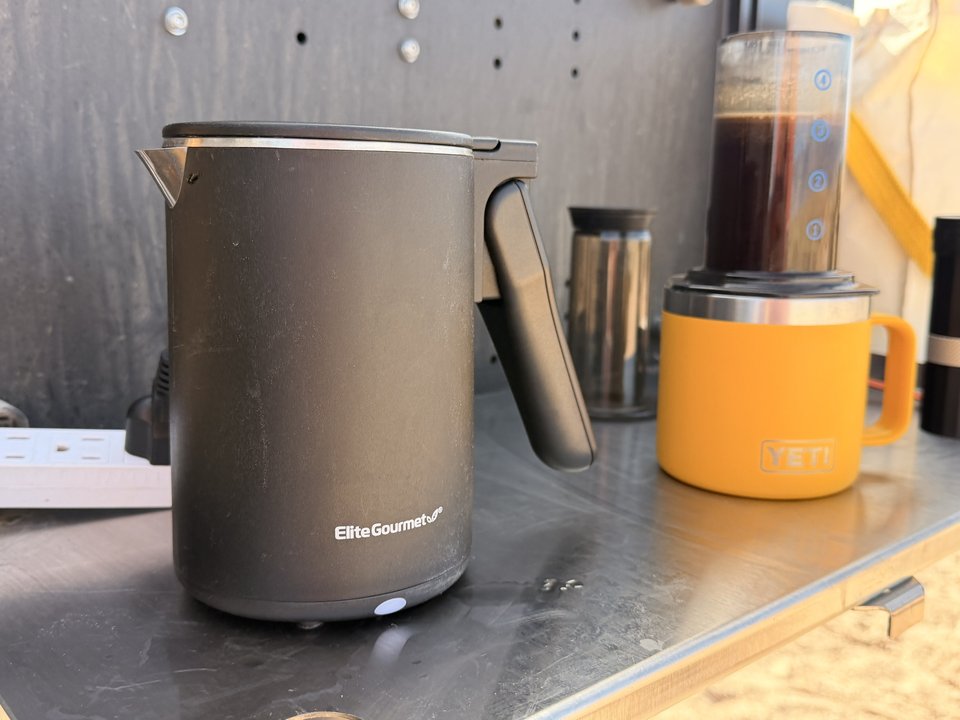
20 oz. Travel Kettle

  • Compact 800-watt kettle for coffee, tea, and quick hot water.
  • Collapsing handle makes it easy to store in a packed camp kitchen.
  • More affordable than premium kettles, with a small quality caveat.

Use

This is my small electric kettle for morning coffee, peppermint tea at night, and any other time I need boiling water at camp. It is a simple comfort item, but it gets used constantly. Having a dedicated little kettle means I do not need to pull out a larger cooking setup just to make a drink or heat water.

Why this one

At 800 watts, it works well with the Rivian power system I use, unlike many household kettles that are closer to 1,500 watts and can ask more of the available circuit. The kettle is small, the handle collapses, and it stores easily. That modest power draw and compact shape are why I chose it over a more substantial kitchen kettle.

Trade-offs

This is an inexpensive kettle, not an exceptionally premium one. A friend bought one on my recommendation and had a leaking issue once after washing it; that may have been a one-off, but it is worth keeping in mind. I have had a good experience, yet I would not present it as indestructible or as a buy-it-for-life appliance.

Alternatives

A larger household kettle, a Keurig, or another dedicated hot-water system can work, but those take more space and often draw more power. This stays small and fairly universal, which matters to me more than having a more elaborate drink setup. It is the kind of compromise that feels right when storage and wattage are both finite.

After use

I would not change it for the way I use it. It has become part of nearly every camp morning and evening. For a small, inexpensive kettle, it has done exactly what I needed.

Protection, recovery, and trail tools

I reach for this gear when the trail gets tighter, the spare needs to stay accessible, or a modest obstacle needs a practical answer.

RIGd UltraSwing spare tire carrier and table behind the truck
Spare tire carrier

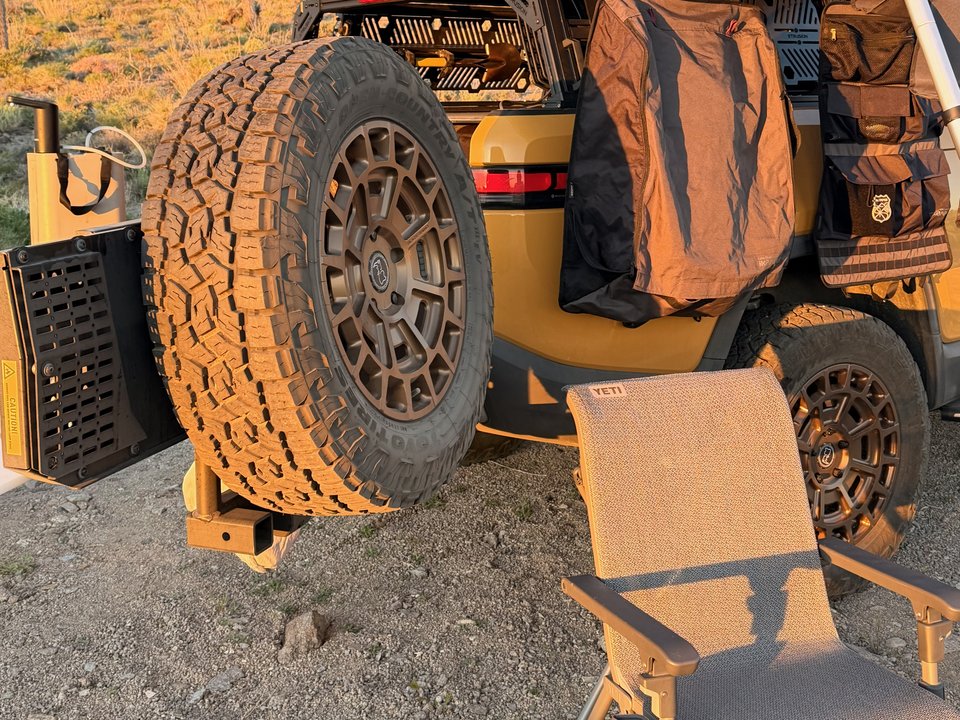
RIGd UltraSwing

  • Makes a full-size spare accessible without emptying the bed on a trail or roadside.
  • Retains a recovery point and adds the UltraTable as a rear kitchen surface.
  • Bed access and the backup camera are the price of the more accessible spare.

Use

It moves my full-size spare from underneath the bed to a place I can reach during a roadside tire change or when I need it on a trail. The factory location is clever and convenient until the truck is loaded. With gear in the bed—and especially with the old factory crossbars—it could mean removing the tonneau cover and unloading half the truck before I could wedge the tire out.

Why this one

The R1’s hitch receiver sits far enough under the bumper that a compatible carrier needs a long stinger to create the right clearance. I chose the RIGd because it retains a recovery point and provides an extension for the limited towing use allowed by its instructions. The attached UltraTable was the second reason: it creates a level work surface beside the tailgate for cooking.

Trade-offs

I have to open the swing arm every time I want bed access, which is genuinely annoying. It also blocks the backup camera unless that camera is relocated. The extension changes the towing situation, too, so its limits matter. Easy tailgate access is the price I pay for having the spare where I can reach it, and that will not be the right trade for everyone.

Alternatives

This makes particular sense on an R1S, where a full-size spare has no comparable factory home. Other swing systems can work, but I would compare receiver depth, bumper clearance, recovery provision, and table options before choosing one.

After use

The factory spare location is convenient when access is easy, but lived experience made an accessible spare worth the inconvenience for me. The UltraTable makes the trade more favorable: I can pull out a fridge and kitchen box, then still have a flat place to cook. When I level the truck, the tailgate and table become two useful level surfaces without setting up a separate table.

Rivian wheel and rock slider after trail use
Rock sliders

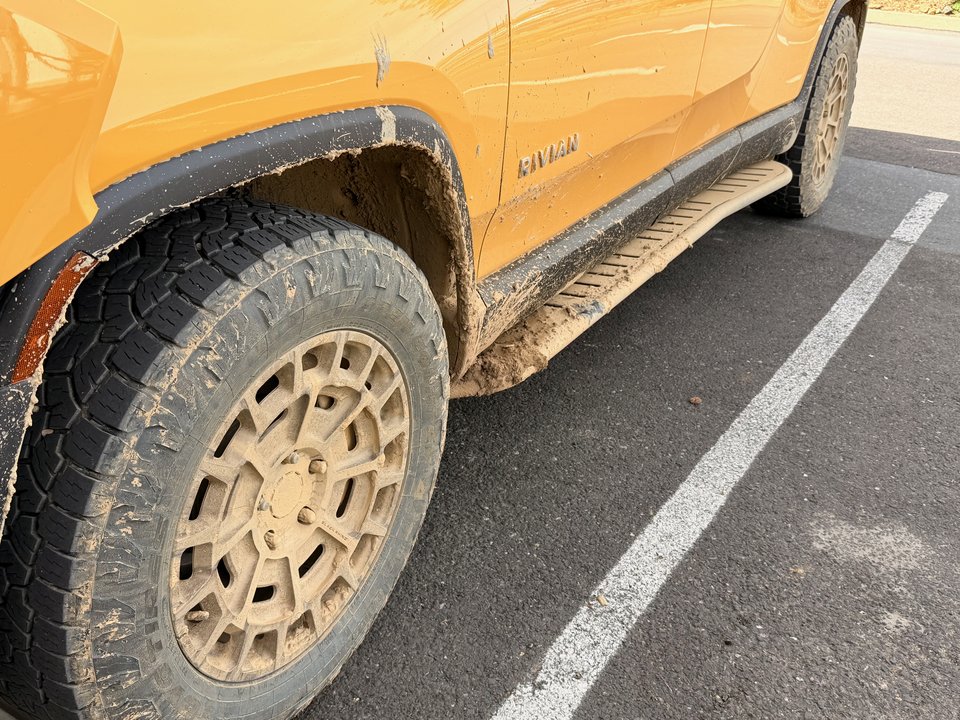
Megawatt Performance Rock Sliders

  • Protect the lower body on rocky trails and provide a useful step.
  • They have taken repeated contact and jacking without noticeable deflection in my use.
  • Expensive, difficult to install, and costs a little vertical clearance.

Use

On the rockier trails I take, the truck’s lower edges and corners eventually get close to rocks. The sliders protect those areas when contact happens. The integrated step also makes daily access easier.

Why this one

I wanted a slider that could take contact and still work as a daily step. The Megawatts gave me that combination.

Trade-offs

They are expensive, difficult to install, and not the kind of component I would want to take on and off regularly. They also cost roughly an inch of vertical clearance, so there are times I may touch a slider where I might not have without one. For me, that is an acceptable trade for protecting the truck when the terrain gets tighter.

Alternatives

A lower-profile slider is worth considering if maximum clearance matters more than a daily step.

After use

After repeated contact with rocks and even jacking the truck from the slider, I have seen no damage beyond scraped powder coat. They have done the job I bought them to do.

Handsaw

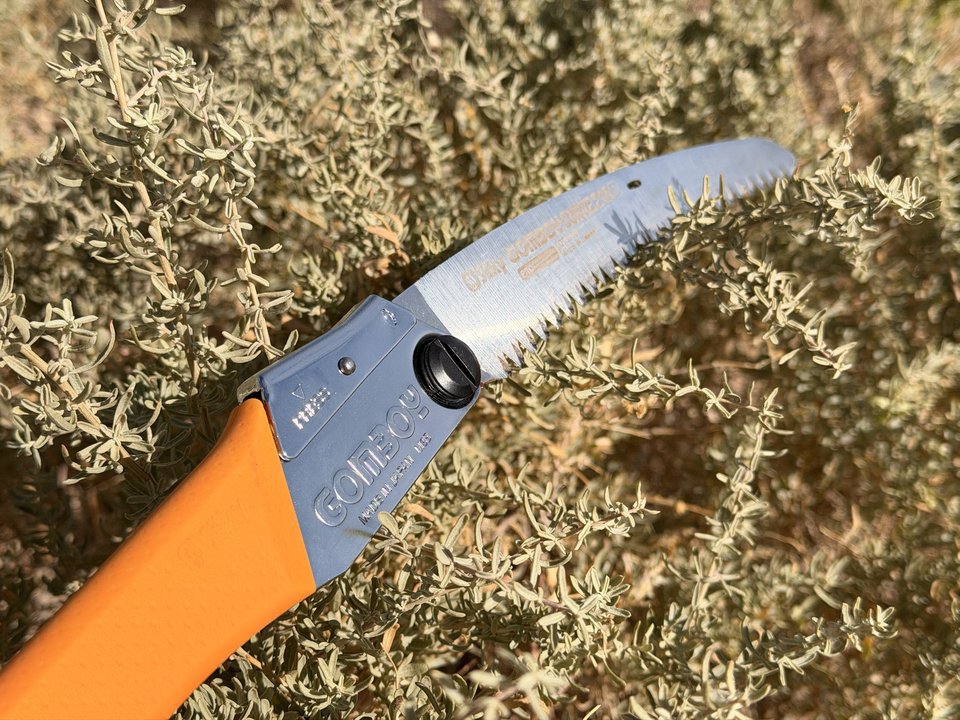
Silky GomBoy Curve Folding Saw

  • Compact folding saw for small downed branches on trails and at camp.
  • Cuts far more effectively than its size suggests without chainsaw bulk or upkeep.
  • Right for modest jobs—not a substitute for a chainsaw on large trees.

Use

This is my compact hand saw for small branches and downed trail obstacles when clearing is permitted, safe, and appropriate. In spring especially, it is not unusual to find branches across a route. For wood around four inches in diameter or less, it cuts far more effectively than its compact size would suggest.

Why this one

It is extremely sharp, folds down small, and is easy to keep with the truck all the time. For the smaller jobs it can handle, it keeps my tool kit much simpler than bringing a chainsaw, fuel, oil, and the extra storage that comes with them. I like having a tool that is ready for a modest problem without encouraging a bigger intervention.

Trade-offs

It is not a solution for a large tree, and I do not treat it like one. That is the trade for a small, quiet hand tool that needs no fuel, oil, or substantial storage. It handles the little things well without pretending to replace the equipment or judgment needed for larger work.

Alternatives

A chainsaw is the right tool for larger work, subject to land-manager rules, the conditions on the ground, and the responsibility that comes with using one. I prefer this saw for small branches and straightforward camp chores. It is the right amount of tool for the jobs I am realistically prepared to take on.

After use

It works very well for the intended jobs. Its compact size means it is actually with me when I need it, and I would not change anything about it.

Cabin comfort and mounting

A few small choices make the cabin easier to live in: stable navigation, reliable charging in the heat, and less sun overhead.

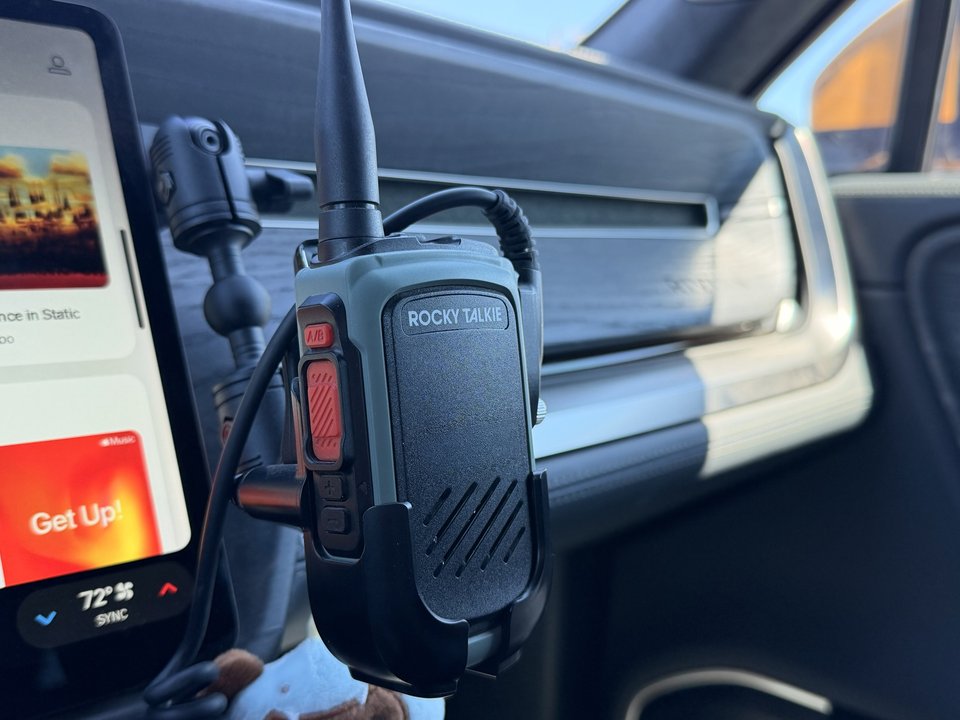
Dash mount

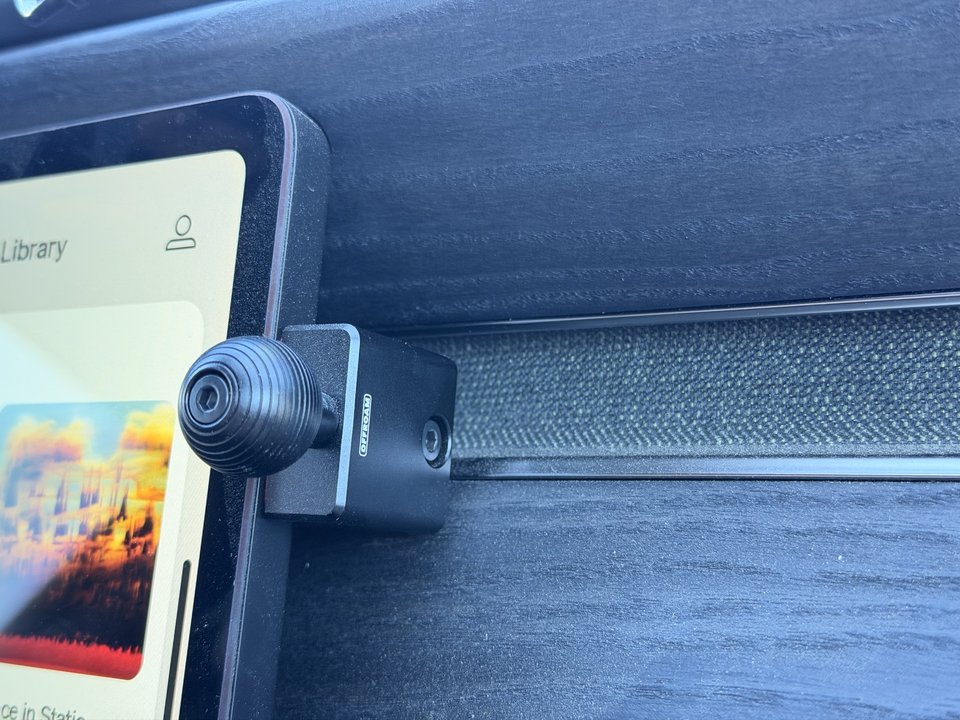
Offroam Rivian R1 Mounting Base

  • Machined-aluminum, 20mm mounting base for phone and navigation hardware.
  • Stays solid in heat where the 3D-printed alternatives I tried did not.
  • Mount placement can block a portion of the screen, depending on the setup.

Use

This is the foundation for mounting my phone and other gear where I can actually see it on the Rivian’s dash. Its 20mm point works with the arms and accessories I already use, including carbon-fiber Bulletpoint arms. It gives my phone charger and trail-navigation setup a stable place to live instead of improvising a new mount for every device.

Why this one

I tried at least half a dozen dashboard-mounting approaches before settling here. This machined-aluminum piece is the most solid one I have found, does not warp in heat, and gives me a standard 20mm interface rather than locking me into a specific arm. It feels like a small detail, but a mount that does not move or sag makes every connected device easier to trust.

Trade-offs

The mount has few drawbacks for me. The real trade-off is placement: an arm or phone can block part of the screen or make it harder to reach. That is a layout problem, not something the mount can solve.

Alternatives

I tried several 3D-printed mounts, and they were not solid enough for the way I use the truck. They may be perfectly adequate for a lighter device or a different tolerance for movement. Once there is a stable base, there are plenty of 20mm arms and accessories to choose from, so the decision is mostly about the base rather than the ecosystem.

After use

It has held up without needing adjustment, and I would not change the mount itself. It disappears into the setup once installed, which is exactly what I want. I bought a second one for the other side of the center screen.

Phone charger

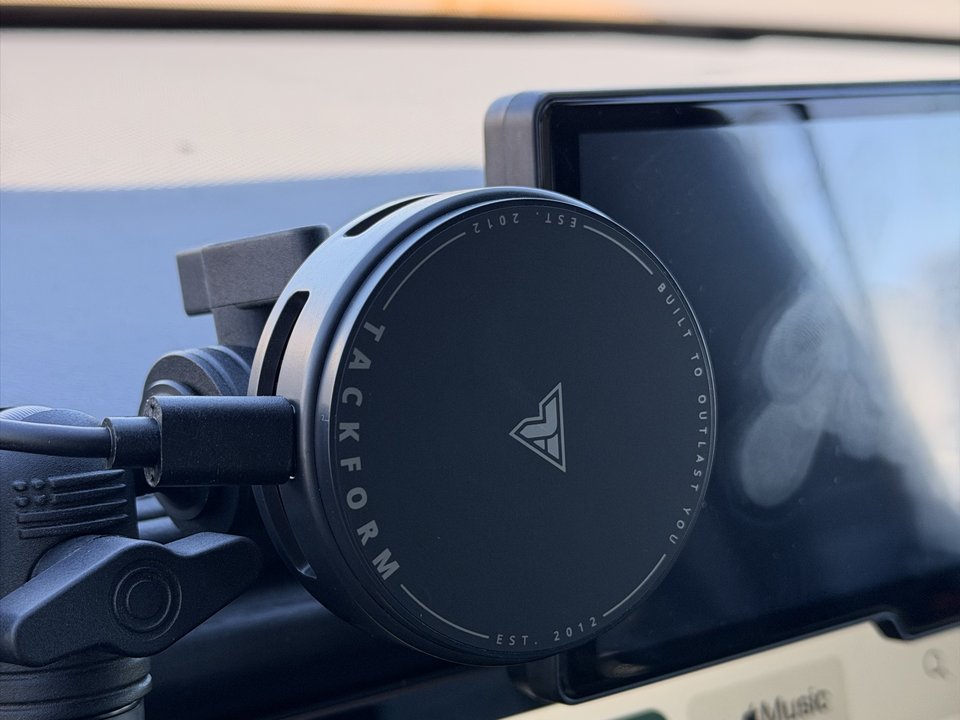
Tackform MagSafe Charging & Cooling Phone Holder

  • Keeps the navigation phone visible, fast-charging, and actively cooled.
  • Integrates with my 20mm dash-mounting system.
  • The fan can rattle occasionally, but it beats losing maps to heat.

Use

I use this to keep my phone in a visible spot when I am referencing onX Offroad on the trail. It provides enough charging speed and active cooling to keep maps available in summer heat, when a phone sitting on the dashboard can otherwise become too hot to use at exactly the moment I need the information.

Why this one

It combines high-speed charging, active cooling, and a 20mm mount in one unit. I have gone through four or five phone-mounting solutions that either charged too slowly or let the phone overheat on the dashboard. The Rivian’s built-in charging pad can run into the same heat problem when I am off-roading in the summer, so this solves a real failure point in my setup.

Trade-offs

The active-cooling fan has rattled a few times, which is annoying when it happens. There is also no escaping the fact that a cooled charger has a fan and moving parts. I accept that compromise because heat and slow charging were more frustrating in use, but a quieter fan would make an already useful piece of kit even better.

Alternatives

I have not found another option in my search that combines high-speed charging, active cooling, and a 20mm mount. There are plenty of mounts and chargers, but that combination has been harder to find than it sounds. I would happily try an alternative that did both jobs without the occasional fan noise.

After use

This is my current favorite charger and I am not looking to replace it casually. It has made the phone much more reliable as a trail-navigation tool. The only reason I would move on is an equally capable option that keeps the charging speed and cooling while eliminating the rattle for good.

Interior roof shade

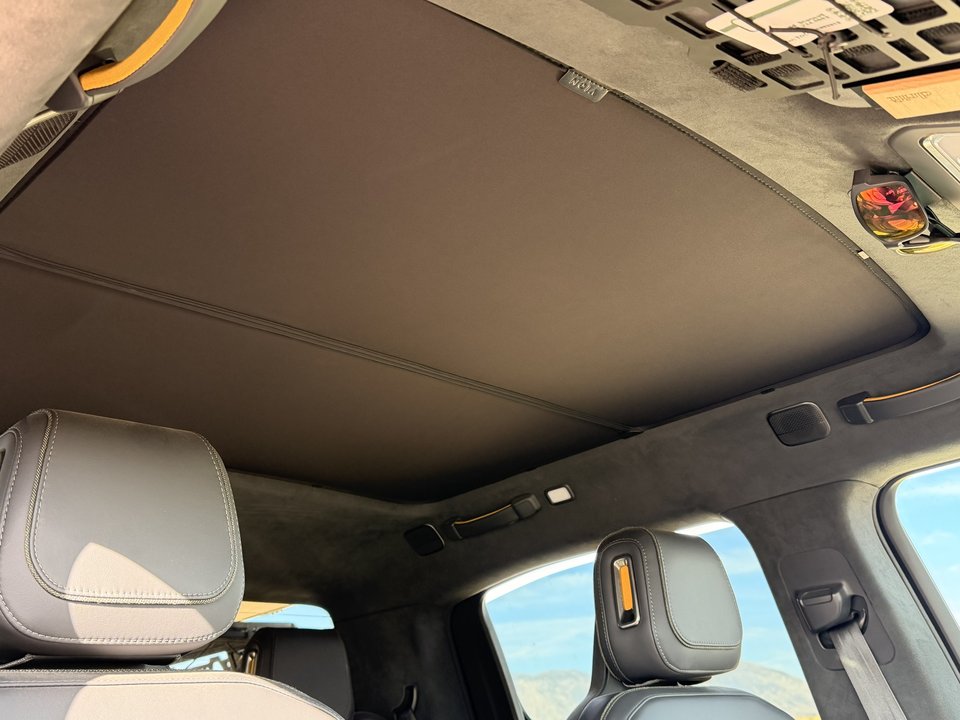
VION R1 Roof Sunshade

  • Makes the cabin noticeably cooler and reduces direct sun exposure overhead.
  • Magnetic two-piece design is easy to install and does not rattle.
  • Stays in full time because the roof rack already limits the glass-roof view.

Use

It adds shade and helps keep the cabin more comfortable in direct sun. After a melanoma diagnosis, reducing my sun exposure inside the vehicle became more important to me. I also added tint around the side windows, but the roof shade is the piece that makes the broad glass overhead feel more manageable on long, sunny drives.

Why this one

I wanted a full roof shade that was easy to install, did not sag, and stayed quiet on the road. Two magnetic pieces connect securely. It was the least fussy option I found, and it made a noticeable difference on trips through Phoenix.

Trade-offs

The main trade-off is the reduced roof view. My rack already limits that view, so I give up little in practice. The shade also makes the cabin feel more enclosed, which some people may not like.

Alternatives

I considered other mesh shades and tinting the roof glass. Those may suit someone who wants a different look or a permanent treatment. I chose this one because it installs easily, stays put, and does not permanently change the vehicle.

After use

It has stayed in place without rattles and noticeably cools the cabin. I am happy with it and plan to leave it installed full time. For me, it is one of those small comfort choices that becomes more valuable after enough hours on the road than it appears on a product page.